Tree inspections in Gunnersbury
If you need tree inspections in Gunnersbury, you are likely looking for clear advice, practical safety checks, and a local team that understands how trees behave in a busy West London setting. In an area with a mix of residential streets, period homes, garden plots, apartment buildings, business premises, and public-facing spaces, tree health and tree safety matter more than ever. A well-timed inspection can help you spot structural concerns early, reduce risk, protect people and property, and keep valuable trees in good condition for years to come.
Whether you manage a home with mature garden trees, oversee a commercial site, or simply want reassurance that a tree is not becoming a hazard, a professional inspection gives you facts rather than guesswork. In Gunnersbury, where space can be tight and trees often grow close to fences, roofs, pavements, car parks, and shared access routes, a careful assessment can make all the difference. Local knowledge matters, because the context around the tree is just as important as the tree itself.
Our tree inspection service is designed to be straightforward from the start. We assess the tree’s visible condition, identify signs of decay or weakness, note site-specific risks, and explain what action, if any, is sensible next. If you are planning works, have received concern from neighbours, or need an inspection before buying, selling, or leasing a property, we can help you understand the tree’s condition in plain language.
Why tree inspections matter in Gunnersbury

Gunnersbury is a distinctive part of West London where established trees add character, shade, privacy, and value to homes and business premises. At the same time, the local environment creates challenges. Many properties sit close to roads, footpaths, railway infrastructure, shared courtyards, and neighbouring buildings. Trees in these settings need regular attention because the consequences of a missed defect can be costly and disruptive.
A proper tree inspection is not only about identifying a problem tree. It is also about preventing avoidable issues. A tree can look healthy from a distance while still showing early signs of internal decay, weak branch unions, root disturbance, fungal activity, or stress caused by compacted soil, drought, construction works, or repeated pruning. Catching these signs early can help you choose the right action at the right time.
For local residents and property managers, inspections are especially useful when a tree is near a boundary, near parking areas, overhanging a roof, or dropping limbs after wind or heavy rain. In a built-up area like Gunnersbury, even a small defect can become important if the tree is positioned where people regularly pass underneath or where vehicles are parked.
Who needs tree inspections?

Tree inspections in Gunnersbury are relevant to a wide range of customers. Homeowners often request them when they notice a change in the tree’s shape, leaf canopy, or branch structure. Landlords and managing agents may need regular checks to help keep communal areas safer and to support responsible property maintenance. Commercial customers often want assurance that trees on their site are not creating risk for staff, visitors, or deliveries.
Some customers contact us after a storm, while others arrange an inspection as part of routine maintenance. You may also need one before major landscaping, building work, or access changes. If a tree is protected, subject to local controls, or part of a boundary dispute, an inspection can provide a clearer basis for decision-making. In each case, the aim is the same: to understand the tree’s condition and respond appropriately.
Our service is suitable for:
• Private homes with mature garden trees
• Apartment blocks and managed developments
• Shops, offices, hospitality venues, and mixed-use sites
• Schools, care settings, and community premises
• Landowners and landlords responsible for tree safety
What a professional tree inspection includes

A thorough inspection should be practical, methodical, and easy to understand. We look at the tree as a whole rather than focusing on one visible symptom. That includes the trunk, crown, main branches, root flare, and the surrounding site conditions. We also consider whether the tree has recently been pruned, whether there is any evidence of past damage, and whether nearby construction or excavation may have affected the root zone.
The inspection process typically covers signs of decay, cavities, cracks, included bark, deadwood, leaning, repeated branch failures, pest activity, and fungal fruiting bodies. We also consider canopy density, leaf size, shoot extension, and any changes that might suggest stress or declining vitality. Not every defect means the tree must be removed. In many cases, the right recommendation is a proportionate one, such as closer monitoring, crown work, or root protection measures.
Common inspection outcomes may include:
- No immediate action required, with routine reinspection suggested
- Targeted pruning to reduce risk or improve structure
- Monitoring for a suspected but not yet critical defect
- Further investigation by specialist methods if needed
- Root zone protection or site changes to reduce stress
How tree inspections work on site
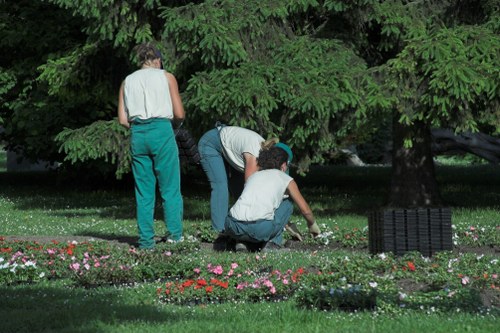
When we arrive for a tree inspection, the aim is to assess the tree efficiently while still giving it the attention it deserves. We begin by understanding your concern. That may be a visible crack, a leaning stem, branch drop, roots lifting paving, or simply the need for a routine check. We then inspect the tree from ground level, usually using a careful visual assessment of the entire tree and its surroundings.
Because each site is different, the surroundings are important. In Gunnersbury, access routes can be narrow, parking may be limited, and trees may sit close to shared boundaries or behind terraced layouts, mews access, or enclosed gardens. We take those constraints into account when assessing both risk and any future work that may be needed. If the location is more complex, we can factor in practical issues such as safe access, pedestrian movement, and the impact on neighbouring properties.
If the tree appears sound, we can explain why it does not currently need intervention. If concerns are found, we can explain the issue in everyday terms, outline the likely implications, and discuss the next sensible step. That may involve remedial pruning, a follow-up inspection, or more detailed investigation. The purpose is to help you make an informed decision rather than leaving you with uncertainty.
Tree inspections in Gunnersbury for homes and gardens
Many residential customers in Gunnersbury value the mature trees that make local streets and gardens feel established and welcoming. At the same time, a tree that was once a benefit can become a concern if it starts showing signs of instability or decline. Homeowners often ask for an inspection because they want to protect a shed, conservatory, driveway, fence, or neighbouring property, or because they have noticed falling branches, fungi, or deadwood.
For family homes, especially where children, pets, or frequent visitors use the garden, safety matters. Trees close to play areas, patios, seating spaces, or parking bays should be checked if they show any sign of weakness. A professional inspection can help separate normal seasonal change from symptoms of a genuine defect. That means you can avoid unnecessary work while still taking action when it is needed.
In many cases, homeowners are also thinking ahead. You may be planning to sell, extend, landscape, or simply improve the garden’s usability. A tree inspection can support those plans by showing which trees are healthy, which require routine care, and which may need more attention before you proceed. Good tree management is often about timing, and a simple check now can prevent bigger problems later.
Commercial tree inspections for local businesses and managed sites
Commercial properties in and around Gunnersbury often need a practical approach to tree safety. Trees near entrances, customer parking areas, delivery bays, outdoor seating, walkways, and boundaries may need inspection on a regular basis. A busy site cannot afford avoidable disruption, so it helps to know whether a tree is stable, whether a defect is worsening, and what level of action is appropriate.
For commercial customers, an inspection is often part of wider site maintenance. It can support planned work schedules, help reduce disruption, and make it easier to prioritise resources. Trees on commercial land can be assets, but if they are neglected, they can also become a source of operational concern. A measured inspection helps you balance appearance, safety, and budget in a sensible way.
We understand that business customers often need clear communication and minimal fuss. That is why the focus is on delivering a useful assessment that can inform next steps without overcomplicating the process. If works are recommended, we can explain how to stage them in a way that is practical for the site and considerate of neighbouring users.
Local knowledge makes a real difference
There are many reasons a local team is valuable for tree inspections in Gunnersbury. First, local access conditions are not always straightforward. A tree may be reachable only through a side passage, rear lane, shared garden, or restricted parking area. Second, local property types vary widely, from older homes with established plots to newer apartment schemes and converted buildings. Third, nearby roads and boundaries mean that trees often affect more than one property at a time.
A local approach also helps with practical scheduling. If you are dealing with a tree problem near Chiswick, Acton, Brentford, Ealing, Kew, or along neighbouring West London routes, it is useful to work with a team that understands the area and can plan visits efficiently. That matters when you want a quick response after a storm, a prompt second opinion, or a planned inspection that fits around work and family life.
Why customers choose a local service:
- Better understanding of common tree types and site conditions
- More practical awareness of access, parking, and shared boundaries
- Faster coordination for time-sensitive concerns
- Clearer advice tailored to local property layouts
- A more personal, responsive service experience
What problems can tree inspections identify?
Visible signs and hidden concerns
Not every tree issue is obvious. Some of the most important defects begin subtly and develop over time. A tree inspection can identify conditions that may not be visible to an untrained eye, especially when the tree has a full canopy or the concern is high in the crown. Common issues include trunk defects, bark damage, split unions, decay around old wounds, root disturbance, and repeated limb failure.
We also look for signs that the tree is under stress. This may include unusually sparse foliage, premature leaf drop, a poor response after pruning, or changes in growth that suggest the tree is struggling. Trees can survive with certain defects for years, but the key question is whether the current condition is acceptable for the tree’s location and exposure. A safe tree in a back garden may not be acceptable if it stands over a pavement, driveway, or communal access route.
If a tree is affected by construction work, soil compaction, changes in drainage, or root pruning from nearby excavation, an inspection can help determine whether further action is needed. In these situations, the tree may not fail immediately, but its resilience can be reduced. That is why a careful professional view is so helpful.
When to arrange an inspection
Some customers know exactly why they need an inspection. Others are simply uncertain and want reassurance. A good rule is to arrange a check if you notice any change in the tree or if the location makes a defect more serious. You do not need to wait for a visible collapse or an obvious emergency. In many cases, the best time to inspect a tree is before a problem becomes urgent.
Common reasons to book tree inspections in Gunnersbury include:
- After strong winds, storms, or heavy rainfall
- When branches start dropping unexpectedly
- If the tree is leaning or appears to have moved
- When fungi, cavities, or deadwood become visible
- Before building, renovation, or landscaping work
- During property purchase or pre-sale checks
- As part of ongoing site or estate maintenance
If you are unsure whether the tree needs attention, an inspection is often the most sensible first step. It can confirm that the tree is acceptable as it is, or it can identify work that should be prioritised. Either result is useful because it gives you clarity.
How we present findings
Customers want straightforward answers. That means the findings should be clear, proportionate, and easy to act on. After inspecting the tree, we explain what we observed, what it means in practical terms, and what options are available. We avoid unnecessary jargon and focus on the key point: is the tree acceptable in its current condition, and if not, what should happen next?
Depending on the situation, the next step might be a simple maintenance recommendation or a more cautious follow-up. For example, a tree with minor deadwood in a low-risk setting may only need routine maintenance. A tree with a structural defect over a public path may need faster intervention. The right recommendation depends on both the tree and the place it grows.
If you have multiple trees on one site, it can be sensible to inspect them together. That helps create a clearer picture of the landscape as a whole, especially on larger residential plots, shared grounds, or business premises with several mature specimens.
Preparing for your tree inspection
A simple checklist for residents and property managers
You do not need to do much before a tree inspection, but a little preparation can help the visit go smoothly. If access is tight or the tree sits in a shared area, it is useful to consider the route to the site and whether gates, bins, vehicles, or garden furniture may need to be moved. If you have any paperwork relating to the tree, such as previous maintenance records, site plans, or past reports, it is useful to have those ready.
Preparation checklist:
- Make sure the tree can be accessed safely
- Remove or move obstacles where possible
- Note any recent changes or concerns you have observed
- Share relevant site details, such as shared access or parking issues
- Gather any previous tree work records, if available
- Inform neighbours or building managers if the tree is in a shared area
In Gunnersbury, practical access can sometimes be the biggest challenge rather than the inspection itself. Terraced streets, limited curb space, and enclosed gardens can make it harder to see the whole tree from multiple angles. A local team that is used to working around these realities can help make the process more efficient.
Pricing factors for tree inspections
Because every site is different, the cost of a tree inspection can vary depending on several practical factors. It is not usually helpful to think in terms of one fixed price for every tree. Instead, the scope of work is shaped by the number of trees, the complexity of the site, the type of inspection required, and whether more detailed investigation is needed after the initial assessment.
Common factors that can affect the price include:
- How many trees need inspecting
- Whether the site is straightforward or difficult to access
- The size, age, and complexity of the trees
- Whether a simple visual check is enough
- If a written report or follow-up visit is needed
- Whether the trees are part of a larger management plan
The useful question is not just what the inspection costs, but what it helps you avoid. An informed decision can reduce unnecessary tree work, support better planning, and help you act before a small issue becomes a larger expense. If you would like to discuss your tree inspection needs, request a free quote and we can talk through the most suitable option for your property.
Areas covered around Gunnersbury
Our tree inspection work in Gunnersbury naturally extends into nearby parts of West London where similar property types and access conditions are common. This includes residential streets, managed developments, commercial plots, and mixed-use areas where trees play an important role in the appearance and usability of the site.
Nearby areas often served alongside Gunnersbury include Chiswick, Acton, Brentford, Ealing, Kew, Hammersmith, Shepherd’s Bush, and other surrounding neighbourhoods. We also work across local residential pockets and business locations where mature trees need regular checks or where a specific concern has arisen. If your property sits on a boundary between areas, it is still worth enquiring.
Because the local landscape is varied, a site-by-site approach works best. A tree beside a quiet garden in one street may need a different response from a similar tree beside a busy access road or car park. That is exactly why local inspections are so useful.
Frequently asked questions
How often should trees be inspected?
The right frequency depends on the tree, its condition, and where it is growing. High-use locations or trees with known defects may need more regular checks than stable trees in lower-risk settings. If you are unsure, a professional inspection can help set a sensible review schedule.
Do I need an inspection if the tree looks healthy?
Yes, sometimes. A healthy-looking canopy does not always reveal structural issues, root problems, or decay inside the trunk. If the tree is close to a house, path, boundary, parking area, or public space, an inspection can still be worthwhile even when everything appears normal from the outside.
Can an inspection tell me whether a tree needs to be removed?
It can help answer that question, but removal is not always the outcome. Many trees can be retained with pruning, monitoring, or site adjustments. The goal is to recommend the most appropriate action for the actual risk and condition of the tree.
What if the tree is shared with a neighbour?
Shared trees can be sensitive, especially near boundaries in Gunnersbury. A professional inspection can provide a neutral assessment of the tree’s condition, which can help everyone involved understand the situation more clearly. It is often a good first step before discussing any works.
Can you inspect trees before renovation or construction?
Yes. This is a common reason for tree inspections. If you plan building work, an inspection can help identify whether the tree needs protection, whether roots may be affected, and whether any works should be scheduled before construction begins.
Why choose a local company for tree inspections in Gunnersbury?
Choosing a local company is about more than convenience. It means working with people who understand the practical realities of the area, from narrow residential access to busy commercial frontage and mixed property layouts. It also means you are more likely to get advice that reflects local conditions rather than a one-size-fits-all approach.
A local team can also be more responsive when a concern is time-sensitive. If a branch has fallen, a tree has shifted after bad weather, or you need a prompt inspection before another contractor starts on site, local availability can save time and reduce stress. For many customers, that responsiveness is just as important as the inspection itself.
Most importantly, a local service should aim to be useful. That means clear communication, sensible recommendations, and an understanding of what matters to property owners in Gunnersbury: safety, practicality, and preserving the value of the trees where possible.
Book your tree inspection now
If you are concerned about a tree, planning property work, or simply want peace of mind, now is a good time to arrange a professional inspection. Whether you are a homeowner, landlord, managing agent, or business owner, a clear assessment can help you decide the best next step. Contact us today to discuss your tree inspection needs in Gunnersbury and request a free quote.
We are ready to help with single-tree concerns, multiple-tree checks, and practical advice for sites where access, neighbours, or ongoing maintenance all need to be considered. Book your service now if you want to move forward with confidence and keep your trees managed responsibly.
Useful final note
Tree inspections in Gunnersbury are most effective when they are timely, site-specific, and followed by sensible action. Whether the result is reassurance, monitoring, or recommended work, the value lies in having a clear professional view before a small concern becomes a larger issue.
Ready to get started?
Request a free quote or make an enquiry today, and we will help you work out the right inspection for your property, your trees, and your schedule.